
F-16 radar support contract worth $488M approved by US, covering Pakistan fleet sustainment, according to Reuters and official defense documents.
US Approves $488 Million F-16 Radar Support Agreement Covering Pakistan
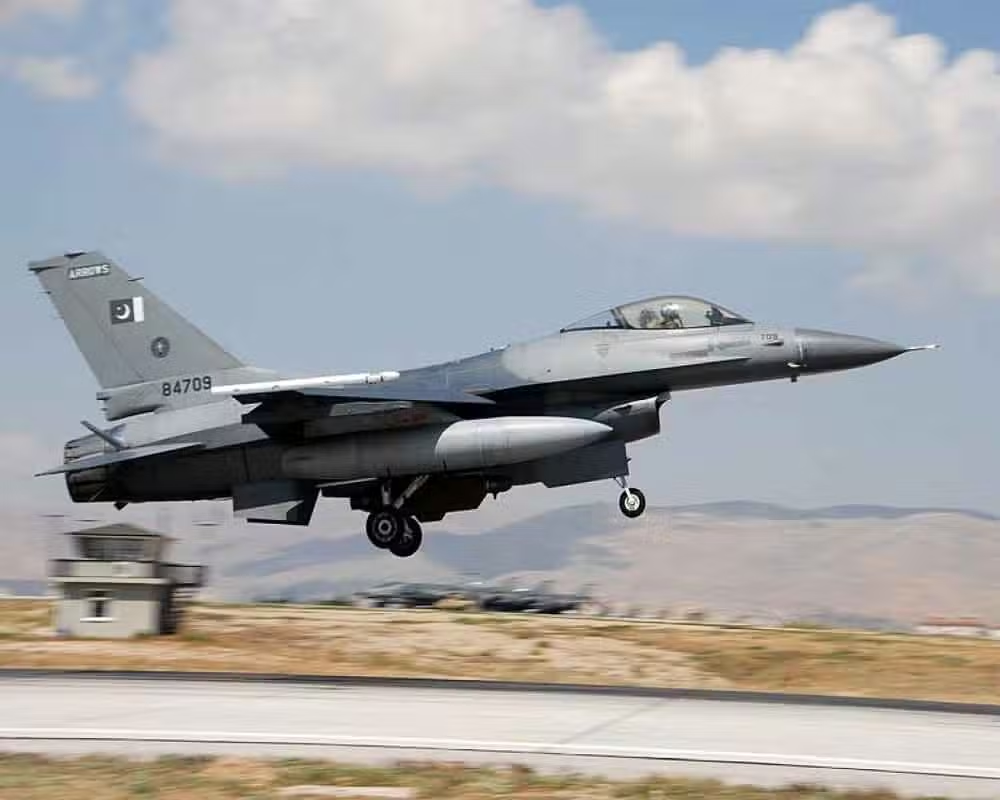
Table of Contents
Introduction
The US has approved a major $488M contract to sustain F-16 radar systems, extending support for multiple allied air forces including Pakistan. The United States has sanctioned a $488 million defense arrangement aimed at sustaining radar and avionics infrastructure used in F-16 fighter aircraft, including units operated by Pakistan, based on official procurement records and defense industry disclosures. The package prioritizes long-term operational continuity instead of introducing new platforms, ensuring reliability across one of the most widely deployed combat aircraft families worldwide.
The development carries strategic relevance amid shifting regional air security conditions. According to Reuters, such lifecycle support agreements are standard practice for maintaining older but actively deployed military systems, particularly where immediate replacement programs remain impractical. The initiative may influence how operators such as Pakistan manage extended service life for their existing fleets.
For more Exciting News Check out Updates : Newz Byte
Breaking Update: Core Development
Records from the US Department of Defense indicate that the agreement covers radar maintenance, avionics servicing, and system-level enhancements for operational F-16 fleets.
Valued at $488 million, the initiative forms part of a wider sustainment framework designed to preserve radar functionality across allied air forces, including Pakistan. The primary result is uninterrupted access to technical assistance and replacement components, minimizing potential disruption in active defense readiness.
Background & Rationale
The F-16 continues to serve as a key asset for multiple air forces due to its adaptability and operational efficiency. However, as highlighted in reporting by Reuters, aging electronic warfare and radar modules require continuous technical intervention and manufacturer-level assistance.
Defense acquisition documentation suggests that such agreements are intended to prolong fleet usability rather than expand combat capability. In Pakistan’s case, the aircraft remains central to air defense planning, making uninterrupted support essential for mission preparedness.
Regional defense analysts suggest the arrangement helps avoid capability disruptions across forces dependent on US-origin military technology.
Timeline of Developments
- Early 2026 – US procurement review identifies radar lifecycle support requirements
- April 2026 – Authorization granted under defense funding allocations
- May 2026 – Agreement reflected in official US Department of Defense filings
Key Highlights
- Total value: $488 million
- Primary focus: Radar systems, avionics upkeep, technical sustainment
- Aircraft type: F-16 fighter jets
- Coverage area: Multiple allied operators, including Pakistan
- Source validation: Reuters reporting and US defense records
Data & Overview Table
| Category | Details |
| Subject | F-16 Radar Sustainment Program |
| Region | United States / Allied Operators |
| Year | 2026 |
| Authority | US Department of Defense |
| Status | Officially Confirmed |
| Financial Scope | $488 million |
Official Statement Summary
US defense (https://www.defense.gov/News/) procurement filings confirm the agreement as part of a standardized lifecycle support program aimed at maintaining radar and avionics performance across allied F-16 fleets.
Although no dedicated political announcement was issued, documentation indicates the objective is to preserve combat readiness and ensure continued compatibility with existing US-supplied systems. As noted by Reuters, such arrangements are typically executed through long-term contractor frameworks specializing in aviation systems support.
Impact Assessment
The agreement holds immediate operational significance for nations operating F-16 aircraft, particularly Pakistan, where the platform remains integral to air defense infrastructure.

Experts indicate the arrangement reduces risks linked to system degradation or supply chain delays that could affect mission availability. On a wider scale, the development reinforces continued US presence within global defense maintenance networks while emphasizing a shift toward sustainment-based military strategies instead of fresh aircraft procurement.
However, the agreement focuses purely on maintaining existing capability rather than expanding combat strength.
Next Phase Expectations
- Ongoing radar system servicing across global F-16 fleets
- Scheduled avionics modernization cycles
- Continuous monitoring of operational readiness under US programs
Expert Commentary
Defense specialists highlight that lifecycle sustainment programs are now central to modern air force strategy.
Key observations include:
- Radar architecture now demands continuous software-hardware refinement
- Legacy fleets increasingly rely on external technical ecosystems
- Long-term procurement planning must balance upgrades and replacements
Analysts further note that such agreements help reduce immediate operational risks while postponing large-scale fleet replacement investments.
Frequently Asked Questions
1. What does the $488 million agreement cover?
It includes radar systems servicing, avionics maintenance, and technical support operations.
2. Is this related to new aircraft procurement?
No, the arrangement strictly focuses on maintenance and sustainment.
3. Who confirmed the arrangement?
US defense procurement records along with reporting by Reuters.
4. Does Pakistan benefit from this deal?
Yes, Pakistan is among the operators receiving F-16 support under this framework.
5. Why is radar sustainment important?
Radar systems are essential for detection, targeting accuracy, and combat operations.
Conclusion
The $488 million radar sustainment agreement underscores the increasing importance of maintaining existing fighter aircraft rather than replacing them outright. Confirmed through US defense procurement records and reported by Reuters, the initiative ensures continued operational stability for multiple air forces, including Pakistan.
The development reflects a broader shift in military aviation strategy, where long-term system support has become as critical as new acquisitions in preserving defense readiness.

2 thoughts on “US Contract $488M F-16 Deal – Pakistan Included – 5 Powerful Radar Support Insights ”