
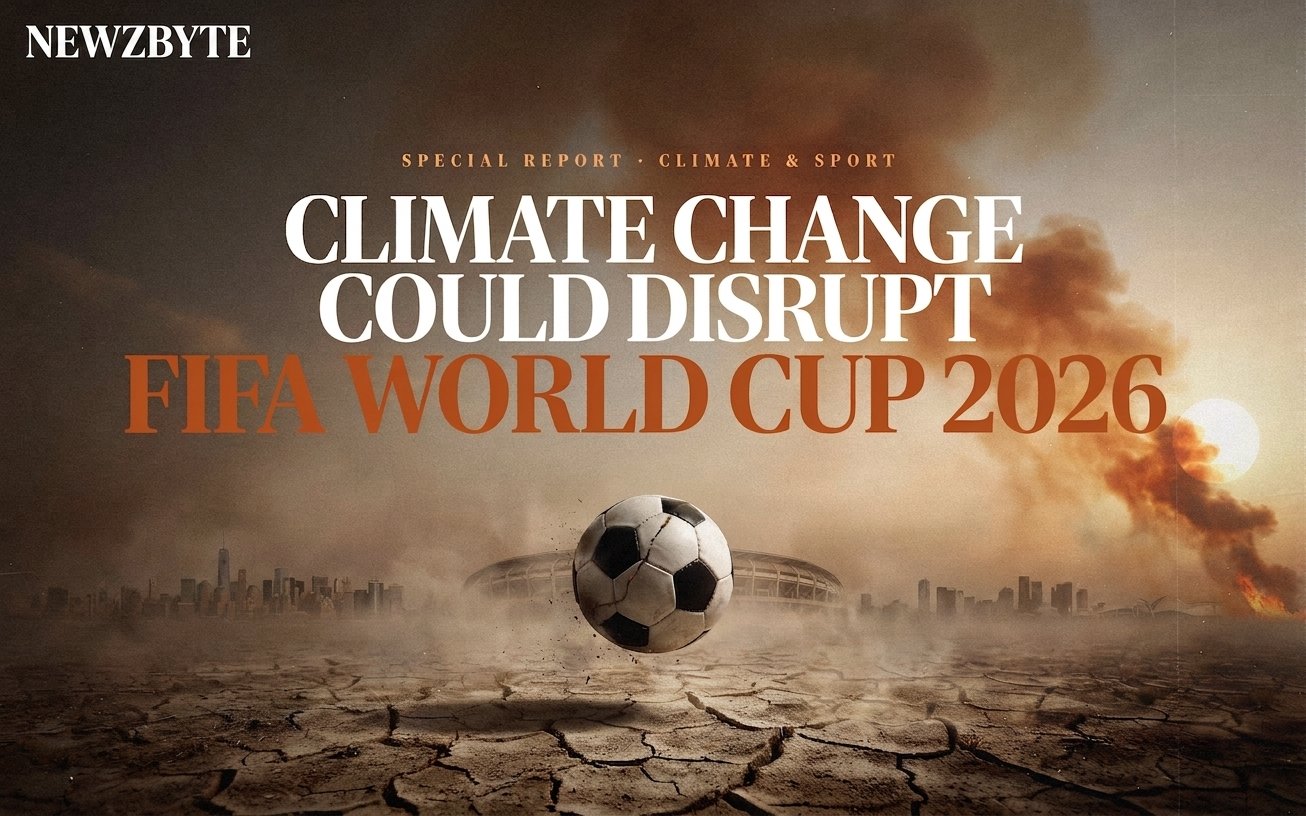
FIFA World Cup 2026 faces rising risks as climate change could disrupt nearly every match due to extreme heat and weather conditions.
Table of Contents
FIFA World Cup 2026 Faces a Heat Challenge Most People Are Ignoring
The FIFA World Cup 2026 is being promoted as the biggest football event ever staged. Forty-eight teams, three host countries, and more than a hundred matches on paper, it looks like a global celebration of the sport.
But behind that excitement, climate research is pointing to a growing issue that cannot be brushed aside. Rising temperatures across North America may affect a large number of matches, especially during June and July when the tournament is scheduled.
Studies from World Weather Attribution (2025) and Climate Central (2024) suggest that heat conditions could influence gameplay, scheduling, and even spectator safety in several host cities.
This is not about isolated hot days anymore. It’s a pattern that keeps getting stronger.
➛ For more Updates about Football Visit NewzByte
What Climate Research Is Indicating for 2026
Recent scientific assessments don’t give exact outcomes, but they do highlight clear trends based on climate models and historical comparison.
Key estimates from recent studies:
- Roughly two dozen matches may face higher heat stress conditions during the tournament (WWA, 2025 estimates)
- Heat-related match conditions are noticeably higher compared to earlier tournaments like 1994
- Several fixtures in open stadiums could face greater exposure due to limited cooling systems
- Extreme heat days in host cities have increased over the past decades (Climate Central, 2024)
These numbers should be understood as projections, not fixed predictions. Still, they point in one direction: summer football in North America is getting hotter and harder to manage.
How Heat Quietly Changes the Game
Heat doesn’t just make players uncomfortable. It changes how football actually looks on the pitch.
What usually happens when temperatures rise:
- Players reduce high-intensity sprints
- Recovery between runs slows down
- Passing accuracy drops under fatigue
- Hydration becomes harder to maintain
- Risk of heat-related illness increases
Sports medicine research linked to FIFA and FIFPRO reports shows that matches played in higher heat conditions often lose intensity, especially in the second half. The tempo drops, and teams become more cautious with movement.
It’s subtle—but it changes the entire rhythm of the game.
Climate Conditions Across Host Cities Are Not Equal
One important point often missed is that not all venues face the same level of heat stress.
Climate Comparison Across Selected Host Cities
| City | Summer Conditions | Future Trend (Estimates) | Main Concern | Exposure Level |
|---|---|---|---|---|
| Miami | Hot and humid | Rising heat index trends (Climate Central, 2024) | Heat + storms | High |
| Dallas | Extremely hot | More frequent 38–40°C days | Extreme heat | Medium |
| Houston | Hot and humid | Stronger heat + humidity | Heat + flooding | Medium |
| Atlanta | Warm, humid | Longer hot seasons | Heat + storms | Medium |
| New York/New Jersey | Humid summers | More heat spikes expected | Heat stress | High |
| Philadelphia | Hot and humid | More extreme heat days | Heat + rain | High |
| Kansas City | Continental heat | Increase in 35°C+ days | Heat + storms | High |
| Seattle | Mild climate | Gradual warming | Smoke risk | Low |
| Vancouver | Cool overall | Slight warming trend | Smoke + rain | Low |
| Monterrey | Very hot | Higher extreme heat risk | 40°C+ heat | Very High |
Southern and inland cities clearly face more pressure compared to cooler northern or coastal locations.
Why WBGT Is the Real Metric That Matters
Experts don’t rely only on temperature anymore. They use Wet Bulb Globe Temperature (WBGT) to measure how heat actually affects the human body.
It includes:
- Air temperature
- Humidity
- Sunlight
- Wind conditions
According to sports safety guidelines (FIFA medical framework, 2024), performance starts to drop once WBGT crosses around 26°C. Above that level, fatigue builds faster and health risks increase.
Recent studies suggest that several 2026 matches could reach or exceed this range during peak afternoon conditions (WWA, 2025 estimates).
Fans Will Feel the Heat Too
It’s easy to focus only on players, but spectators are part of the equation too.
Millions of fans will attend matches, travel between cities, and spend hours in outdoor environments.
Real risks for fans include:
- Dehydration in long queues outside stadiums
- Heat exhaustion in uncovered seating areas
- Long exposure during afternoon kickoffs
- Higher risk for children and elderly spectators
Public health advisories, including WHO heat safety guidance (2024), highlight that crowded outdoor events in high humidity can become dangerous if proper cooling and hydration systems are not in place.
What FIFA Is Doing to Manage the Risk
FIFA has already introduced several measures to reduce heat-related risks during matches.
Current planning includes:
- Mandatory cooling breaks during games
- More evening and night match scheduling
- Hydration stations across stadiums
- On-site emergency medical teams
- Cooling zones and misting systems in selected venues
Stadiums with roofs or air-conditioning naturally provide better protection, but many venues still rely on scheduling adjustments and temporary cooling solutions.
The Bigger Picture: Climate Trend Is Still Moving Up
Even if the 2026 tournament is managed successfully, long-term climate data shows a steady rise in summer temperatures across North America.
Reports from Climate Central (2024) and related climate models indicate:
- Summers are becoming consistently hotter
- Heatwaves are lasting longer than before
- Humidity levels are rising in coastal regions
- Extreme weather events are becoming more frequent during summer months
These changes are gradual but consistent. That’s why experts say 2026 is not an isolated case—it’s part of a long-term shift.
Pro Tip
Pro Tip: Teams that arrive at least 10–14 days early usually handle heat conditions better. It allows players to adjust hydration, sleep cycles, and training intensity before competitive matches begin. In tournaments like the World Cup, this small adjustment often separates average performances from strong starts.
What This Means for the FIFA World Cup 2026
This tournament will still be historic in scale and excitement. But it also highlights something important: football is now being shaped by environmental conditions more than before.
Key pressure areas include:
- Match timing and scheduling flexibility
- Player safety protocols under heat stress
- Stadium design and cooling systems
- Fan protection in extreme conditions
For readers following updates, related coverage is available in:
- FIFA 2026 updates section
- Sports news analysis
- Climate impact reports
Final Thoughts
The FIFA World Cup 2026 will still deliver global attention and unforgettable matches. But the conditions around those matches are changing quietly and steadily.
Heat is no longer a background detail—it’s part of the planning, the strategy, and sometimes even the outcome.
Football will adapt, like it always does. But the environment it’s played in is clearly entering a new phase, and ignoring that reality is no longer possible.
Sources of Information
- World Weather Attribution (WWA, 2025) climate analysis
- Climate Central report on North American heat trends (2024)
- FIFA medical and tournament safety guidelines (2024)
- WHO heat safety guidance for public events (2024)
- Reuters climate and sports reporting on World Cup risks
- Financial Times analysis of heat impact on football
- Sports medicine research on WBGT and athlete performance
- NOAA climate projections for North America